Haloxyfop-R-Methyl
Haloxyfop-R-Methyl from Awiner is a proven grass Herbicide safe for soybeans, ideal for growers and suppliers wanting reliable grass weed control.
Grassy weeds are among the toughest yield robbers in soybean fields. Once they grow alongside young soybean seedlings, they fight hard for water, nutrients and sunlight. Even a mild infestation, if not controlled early, hinders pod set and lowers final bean weight. Most soybean-friendly herbicides work poorly on grassy weeds. That means farmers have to spray repeatedly, driving up costs and leaving almost no room for mistakes.
Why Grass Weeds Steal Your Soybean Yield Every Season?
Young soybean plants are not strong competitors at the beginning of their growth cycle. Fast-growing grass weeds spread quickly and take most of the resources before the soybean canopy closes over the soil. Once this critical window passes, even if you remove weeds later, some yield loss cannot be recovered.
Many alternative products work poorly when the weather turns dry, only work during a very short window, or merely burn the leaves without stopping regrowth. Hand pulling or mechanical weeding becomes too expensive on large farms. Farmers need a product that stops grass weeds from coming back, stays gentle on soybeans, and works reliably across different field conditions.
What Makes Haloxyfop-R-Methyl the Go-To Herbicide for Soybeans?
Haloxyfop-R-Methyl is a selective, post-emergent herbicide that targets grassy weeds. Once absorbed by grass leaves, it travels down through the plant to the roots, halting growth and killing the entire weed — not just burning the foliage.
Soybeans and other broadleaf crops naturally metabolize this active ingredient, so they stay safe when applied properly. It delivers stronger, more reliable control than many alternative grass herbicides and maintains good performance even under low soil moisture.
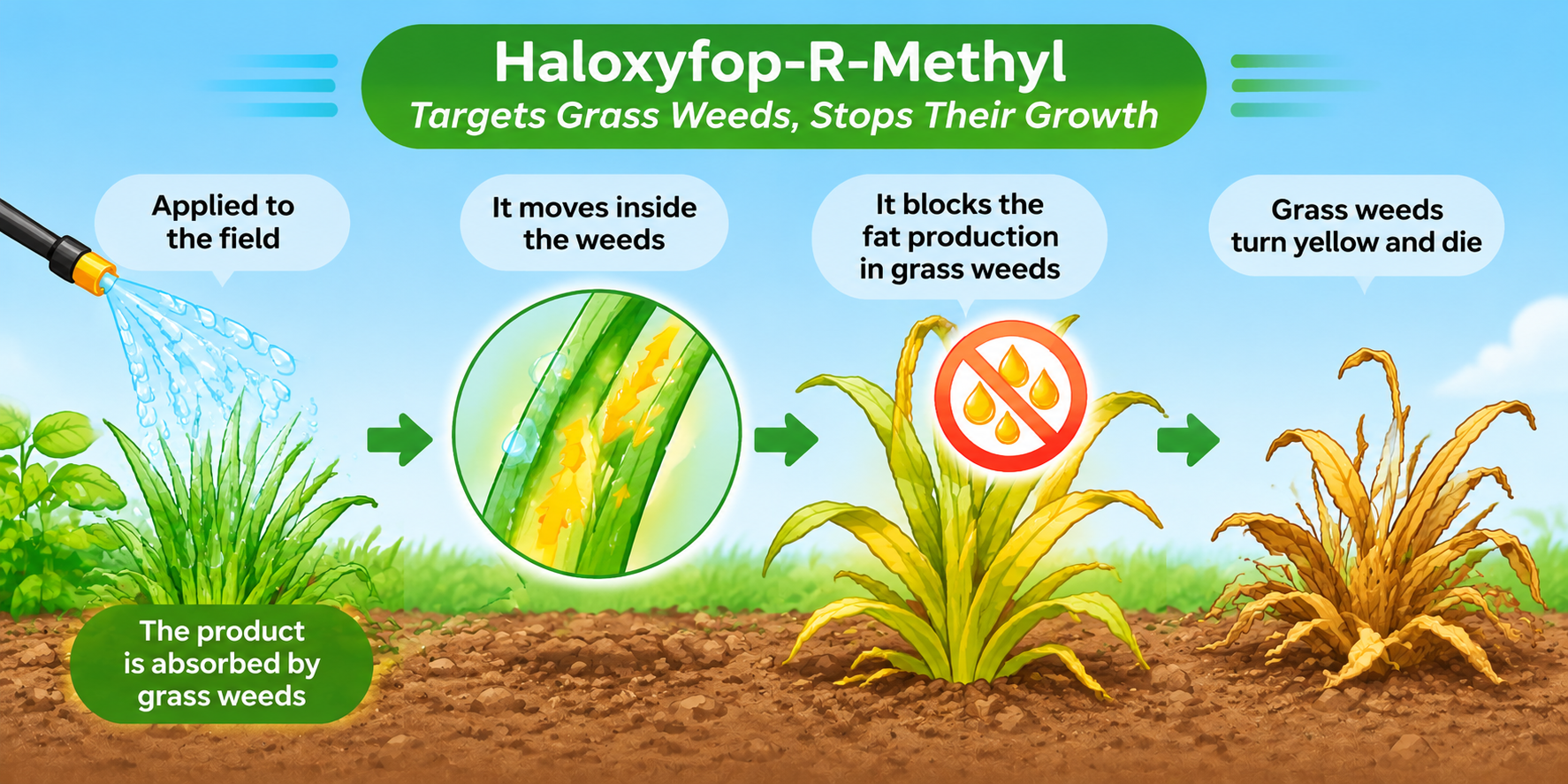
Which Grass Weeds Can Haloxyfop-R-Methyl Control in Soybean Fields?
This product works well on most common annual grass weeds found in soybean fields, including barnyard grass, green foxtail, giant foxtail, crabgrass and goosegrass. It can also slow down the spread of certain persistent perennial grasses if applied at the right rate and growth stage.
One important point: it only works on grass weeds. It will not kill broadleaf weeds or sedges. If your fields carry mixed weed populations, you will need to pair it with other compatible sprays to get full weed control. Always test mixtures first and follow local usage guidelines, because some tank combinations can weaken its effect against grasses.
When Is the Best Time to Apply Haloxyfop-R-Methyl on Soybean?
Timing directly decides how effective your spray will be. The ideal moment is when grass weeds are actively growing, usually with two to five leaves. At this stage, they take in the spray quickly and are much easier to eliminate. Once grasses start branching out and thickening, higher doses will be required, and it will take longer for them to die.
Spray only when your soybean crop is healthy and not stressed. Avoid spraying during drought, frost or the hottest hours of the day, as these conditions slow absorption. Do not spray if rain is expected within the next hour, because rain will wash the chemical away before it works. Always follow local rules for dosage, water volume and waiting periods.
How to Use Haloxyfop-R-Methyl Safely for Maximum Control?
Use clean water and keep the tank well mixed while spraying. Choose nozzles that create even coverage over weed leaves; uneven spraying is one of the top reasons for poor results. Avoid excessive overlapping of spray swaths, which can lead to over-application in spots.
Do not rely on this single product year after year to control grass weeds. If you use the same type of spray continuously, weeds may become harder to kill over time. A sustainable plan means rotating with other weed control options, changing planting patterns when possible, and checking fields regularly for surviving weeds. Mark any patches where grasses survive spraying, and adjust your programme early.
Take care to prevent spray drift. Rice, wheat, corn and other grass crops are very sensitive to this product, and even tiny drifting amounts can seriously damage them. Spray when winds are calm and keep proper buffer zones between your soybean field and nearby grass crops. Wear standard protective gear during mixing and application, and avoid letting runoff flow into water areas.
If you plan to mix it with other agrochemicals, run a small jar test first to confirm compatibility. Some additives and sprays can reduce its performance. If a mixture shows signs of weak control, separate applications with enough time in between will be safer.
Why Choose Awiner Haloxyfop-R-Methyl for Your Soybean Business?
Awiner supplies reliable agrochemicals to farmers and distributors worldwide. Our Haloxyfop-R-Methyl is produced under tight quality checks, so each batch delivers the same stable performance. This consistency helps farmers trust your product and keeps repeat orders steady.
We support bulk shipments and flexible order plans for international buyers. Beyond the product itself, our technical team can share practical application programmes tailored to local weed types and common crop rotations. If you want to add a dependable grass weed control solution for soybeans, cotton and other broadleaf crops to your portfolio, this product is a strong choice.
FAQ
Q1: Can Haloxyfop-R-Methyl injure soybean plants?
When used at recommended rates and under suitable weather conditions, soybeans stay safe. Crop stress may appear if you overdose, spray during poor weather, mix it with incompatible products or let spray drift concentrate on plants. Light discoloration occasionally appears but rarely hurts yields if you follow the label.
Q2: How long will it take to see results?
Targeted grasses stop growing within a few days. Full drying down usually takes seven to fourteen days, depending on weed type, size, temperature and moisture. Slow visible change is not always a sign of failure; tougher perennial grasses need more time.
Q3: What should I do if some grasses survive repeated sprays?
Stop using this type of spray alone on that patch. Switch to other proven weed control methods, scout the field more often, and remove surviving weeds before they produce seeds. Good weed management is an ongoing plan rather than a one-time fix.
Q4: Can I spray this on all soybean varieties?
Most common soybean varieties tolerate it well. If you work with special or new varieties, run a small trial on a limited area before spraying the whole field.