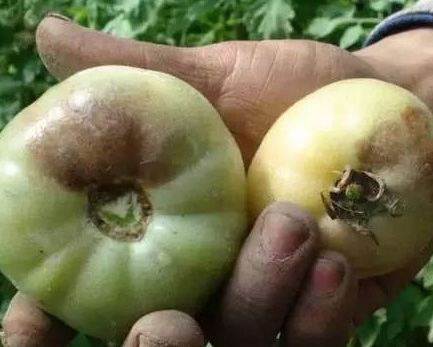
Pyraclostrobin 5%+Metiram 55% WDG
For tomato growers around the world, few problems are more frustrating than watching tomato leaves turn yellow, develop unsightly spots, and eventually rot. These symptoms are not just a cosmetic issue—they signal serious diseases that can cripple your crop, reduce yield, and destroy the quality of your tomatoes, leading to significant financial losses.Pyraclostrobin 5%+Metiram 55% WDG, a high-efficiency, broad-spectrum compound fungicide specifically formulated to target and eliminate the root causes of tomato leaf yellowing, rotting, and spotting. With its dual protective and curative effects, this product is your first line of defense in protecting your tomato crops and securing a healthy harvest.
Part 1: The 3 Major Diseases Causing Tomato Yellow Leaves, Rot & Spots
To effectively combat tomato leaf issues, it’s critical to first identify the diseases causing them. The three most common culprits behind yellow leaves, rot, and spots are early blight, leaf mould, and bacterial canker—each with distinct symptoms and causes, but all equally destructive if not controlled.
1.1 Early Blight of Tomato
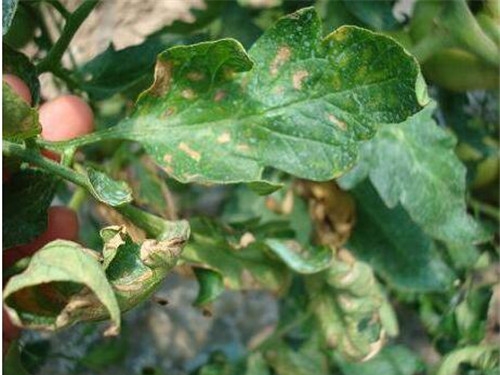
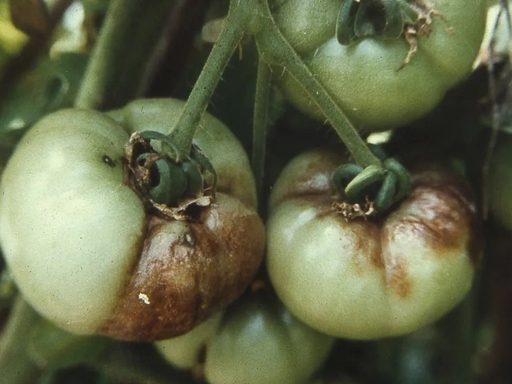
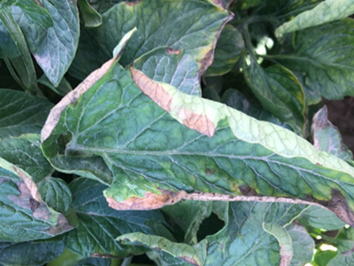
Early blight is one of the most widespread and damaging tomato diseases, affecting both field-grown and greenhouse tomatoes. The first signs appear on the lower leaves of the plant: small, yellow spots that gradually expand into irregular shapes with characteristic target-like rings (dark brown centers surrounded by lighter brown or yellow edges). As the disease progresses, the leaves turn brown, dry out, and curl, eventually rotting and falling off. If left untreated, the spots can spread to stems and fruits, creating sun.
1.2 Tomato Leaf Mould
Tomato leaf mould is particularly problematic in greenhouses or other enclosed growing spaces with poor ventilation. The disease first manifests as yellow patches on the upper surface of tomato leaves, while the corresponding lower surface develops a fuzzy, gray-brown mold. As the infection worsens, the leaves turn brown, shrivel up, and die, severely reducing the plant’s ability to photosynthesize. This not only stunts plant growth but also reduces fruit production and quality. Leaf mould is caused by a fungus that spreads rapidly in warm, humid conditions—making overcrowded, poorly ventilated greenhouses the perfect breeding ground. Unlike early blight, it primarily targets the leaves, but its impact on photosynthesis can be just as devastating.
1.3 Tomato Bacterial Canker
Bacterial canker is a deadly disease that can wipe out entire tomato crops if not detected early. The symptoms start with leaves turning yellow from the edges or tips, spreading inward to form yellow-green mottles. The stems develop brown spots and bulges that may crack open, oozing a sticky, yellowish bacterial pus. On fruits, small, raised, bird-eye-like spots appear—these spots are not just unsightly but also make the tomatoes inedible and unmarketable. Bacterial canker is caused by a bacterium that spreads through wounds (such as those from pruning or insect bites), contaminated water, and soil. High temperature and humidity accelerate its spread, and once a plant is infected, it can quickly pass the disease to neighboring plants.
A key reminder: These three diseases often coexist in tomato fields, especially in warm, humid conditions. Accurate identification and targeted prevention and control are the only ways to minimize losses and protect your crop.
Part 2: Why Pyraclostrobin 5%+Metiram 55% WDG Is the Best Solution?
When it comes to protecting your tomato crops from yellow leaves, rot, and spots, not all fungicides are created equal. Pyraclostrobin 5%+Metiram 55% WDG stands out as the best solution because of its unique formulation, dual mode of action, and proven effectiveness against all three major tomato diseases. Here’s why it’s the top choice for growers and buyers worldwide:
2.1Product Overview
Pyraclostrobin 5%+Metiram 55% WDG is a water-dispersible granule (WDG) fungicide, a formulation known for its excellent solubility, dispersibility, and adhesion—ensuring it sticks to leaves and stems even in light rain. Its active ingredients are 5% Pyraclostrobin and 55% Metiram, two powerful fungicides with complementary modes of action. The core advantages of this product are its broad-spectrum coverage, dual preventive and curative effects, long-lasting protection (10-14 days per application), low risk of drug resistance, safety for tomato crops, and ease of use—making it suitable for both small-scale growers and large commercial operations.
2.2 Dual Mode of Action
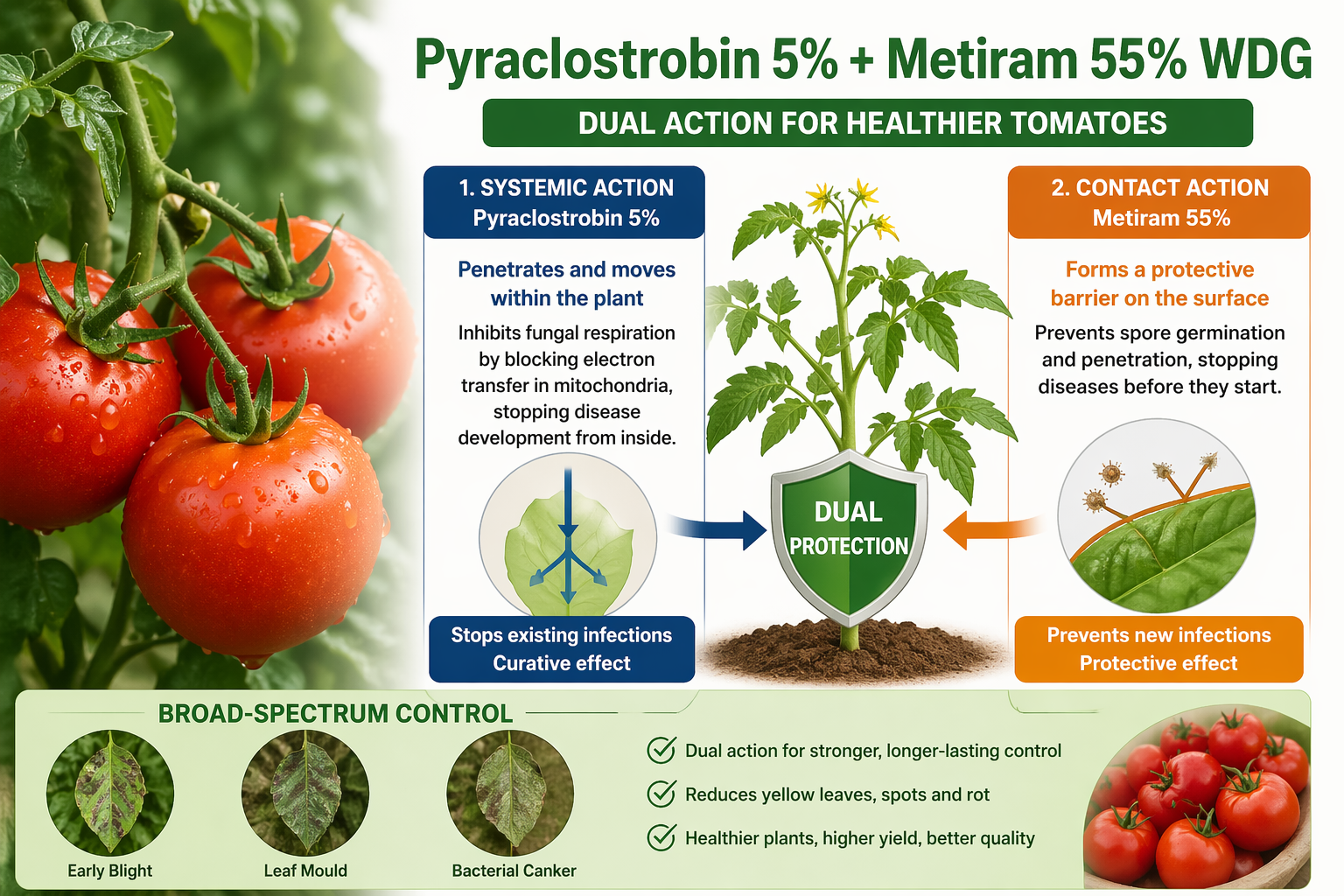
Pyraclostrobin 5% + Metiram 55% WDG combines systemic and contact activity to deliver both curative and preventive protection. Pyraclostrobin penetrates plant tissues and inhibits fungal respiration, stopping disease development from within, while Metiram forms a protective barrier on the plant surface to block spore germination and infection. Together, they create a strong synergistic effect that improves control efficiency, extends protection duration, and reduces resistance risk.
2.3 Advantages over Traditional Fungicides
Compared with single-ingredient fungicides, Pyraclostrobin 5% + Metiram 55% WDG provides stronger and more reliable disease control through dual modes of action. It offers long-lasting protection for 10–14 days, reducing spray frequency and labor costs. Its multi-site and systemic action prevents resistance, and the WDG formulation dissolves quickly for easy, safe use with various equipment.
Part 3: How to Use Pyraclostrobin 5%+Metiram 55% WDG Correctly
3.1 Recommended Dosage (Tomato-Specific)
For tomato crops, the recommended dilution ratio is 1500-1760 times. This means mixing 1 gram of the product with 1.5 to 1.76 liters of water. For large-scale applications, use 750 liters of diluted solution per hectare. Adjust the dosage slightly according to the severity of the disease and the growth stage of the tomatoes—for severe infections, use the higher end of the dilution ratio, and for preventive use, the lower end is sufficient.
3.2 Spraying Time & Frequency
Firstly, start preventive spraying at the seedling stage or before disease appears, applying every 10–14 days under warm and humid conditions.For curative control, spray at the first symptoms and repeat every 7–10 days for 2–3 applications. Apply in the early morning or evening, avoiding high temperatures and strong winds for best results.
3.3 Correct Spraying Method
First, dissolve the required amount of product in a small volume of water. Then, dilute it to the recommended ratio while continuously stirring to ensure uniform mixing. Subsequently, spray evenly on all plant parts, including both sides of leaves, stems, and fruits, to achieve full and complete coverage. In addition, using a fine mist sprayer is recommended for better adhesion and improved effectiveness.
Part 4: Product Specifications
4.1 Product Specifications
Detailed parameters of Pyraclostrobin 5%+Metiram 55% WDG:
- Formulation: Water-Dispersible Granule (WDG)
- Active Ingredient Content: 5% Pyraclostrobin + 55% Metiram
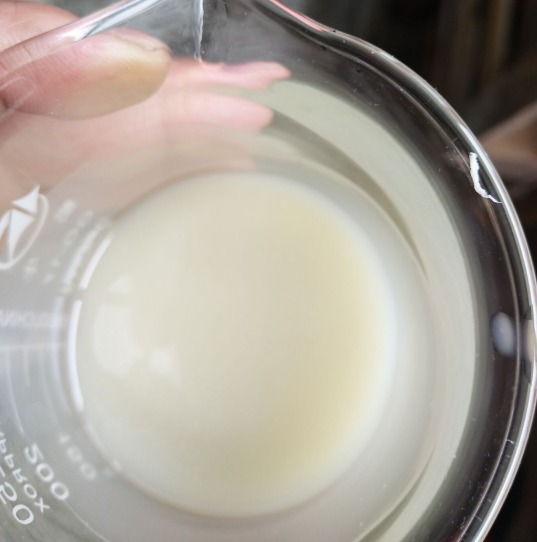
- Solubility: Easily dispersible in water, forming a uniform suspension
- Shelf Life: 2 years when stored in proper conditions
- Packaging Specifications: 100g/bag, 1kg/bag, 25kg/drum (customizable)
4.2 OEM & Customization Services
We understand that every market has unique needs, which is why we offer flexible OEM and customization services:
- Custom Packaging: Design and produce packaging with your brand logo, colors, and text.
- Labeling: Custom labels with multilingual instructions (English, Spanish, French, Arabic, etc.) to meet local market requirements.
We believe quality comes with responsibility — from safe production to environmentally friendly solutions.
Partner with us for agrochemical products you can trust, built on ethics and reliability.