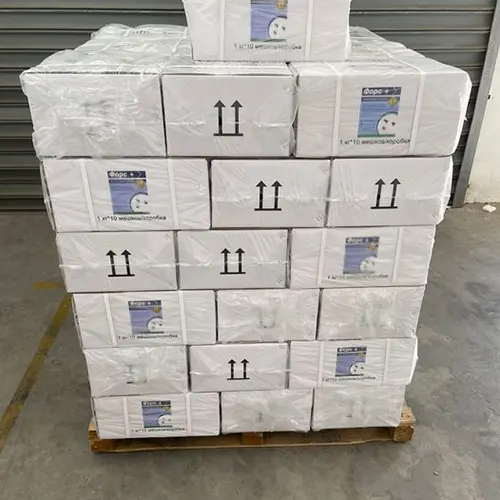
Wheat sheath blight
I. What is sheath blight?
Wheat sheath blight is a soil-borne fungal disease caused by Rhizoctonia cerealis, also known as sharp eyespot disease. It mainly infects the leaf sheaths and stems of wheat. Under severe conditions, it can lead to white heads, lodging, and significant yield losses, making it one of the most important diseases affecting wheat production.
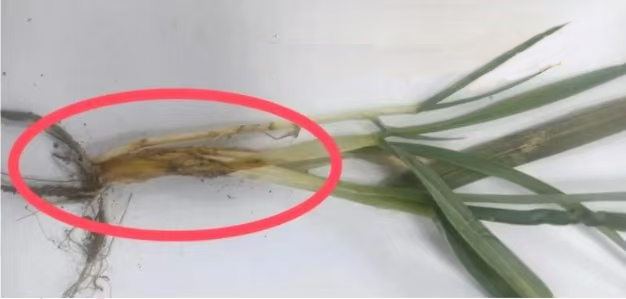
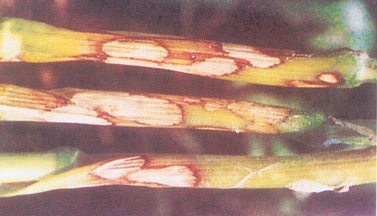
2. Characteristics for Disease Identification (Three Main Features)
| Onset period | Affected areas | Typical symptoms |
| Seedling stage | Rhizome, leaf sheath | Brown, spindle-shaped lesions appear, and in severe cases, the seedlings die. |
| green-up stage->jointing stage | basal leaf sheath,stem | Forms “cloud-like” brown patches (core characteristic) |
| heading stage->grain filling stage | stem | The lesions encircle the stem, forming “eye spots,” making it easily breakable (resulting in withered, bleached spikes). |
3.Disease epidemiology
(1) Transmission routes: The disease is transmitted through soil, diseased plant debris, and infected seeds.
(2) Favorable conditions for disease development:
- Climate: Warm (15-21℃), rainy, and humid conditions in spring.
- Cultivation practices: Early sowing, dense planting, excessive nitrogen fertilization, and dense plant canopy in the field.
- Soil: Low-lying, damp areas and heavy, clayey soils.
4.Integrated management measures
Early control is key for wheat sheath blight.
(1)Prevention during the sowing period (basic, lowest cost)
- Select disease-resistant (or tolerant) varieties.
- Seed treatment (key measure):Use seed treatments containing active ingredients such as Difenoconazole, Fludioxonil, Tebuconazole, and Thifluzamide for seed coating or mixing.
(2) Agricultural Control (Fundamental)
- Rational crop rotation: Rotate with non-gramineous crops such as rapeseed and soybeans.
- Timely late planting: Reduce the chance of infection before winter.
- Balanced fertilization: Increase the application of phosphorus and potassium fertilizers, and avoid excessive nitrogen fertilization.
- Ditch cleaning and field drainage: Reduce field humidity and increase permeability.
(3) Chemical control (the key is “precision”)
Optimal period for prevention and control:from the late green-up stage to the early jointing stage.
- Control Indicators: Apply pesticides immediately when the disease incidence reaches 10%.
- Pesticide Selection: Preferred Thifluzamide, Epoxiconazole, Difenoconazole + Propiconazol.
- Effective pesticides: Jingangmycin, Tebuconazole, Diniconazole.
- Application Guidelines:
- Target the base: Increase the water volume and spray the pesticide solution evenly onto the base of the wheat stems.
- Two applications: For severely affected fields, spray again after 10-15 days.
- Rotate pesticides: To prevent the development of pesticide resistance in the pathogens.